
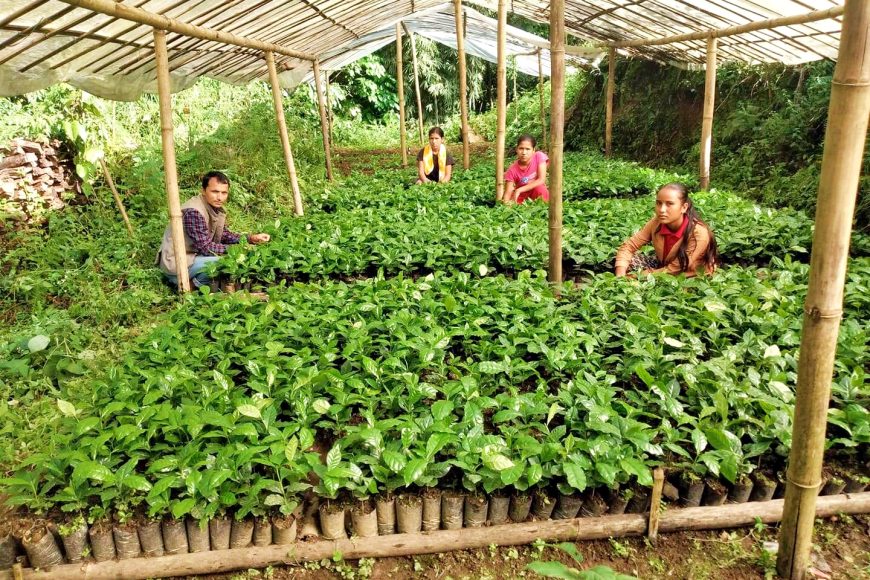
Course Overview
This 7-week residential training program is designed to equip trainees with essential knowledge and hands-on skills in organic vegetable farming. The training is conducted entirely in the Nepali language and takes place in Bhimdhunga, Nagarjun, near Kathmandu Valley.
As a fully residential course, participants are provided with accommodation, meals, and all necessary on-site facilities, ensuring a focused and immersive learning experience. The program follows CTEVT Nepal’s technical and vocational training model and emphasizes sustainable agriculture practices, organic standards, composting, seedling preparation, pest management, and marketing techniques. Participants stay at the institute’s residential accommodation.
The curriculum combines classroom instruction with field-based practical learning, making it ideal for aspiring organic farmers, agri-entrepreneurs, and rural youth interested in adopting eco-friendly and profitable farming methods.
Program Schedule
- Duration: 7 Weeks
- Days per Week: Sunday to Friday (6 Days/Week)
- Morning: Theory (2–3 hrs)
- Afternoon: Practical (3–4 hrs)
- Location: Bhimdhunga, Nagarjun, near Kathmandu Valley.
Weekly Breakdown
Week 1: Introduction to Organic Farming
| Day | Morning (Theory) | Afternoon (Practical) |
|---|---|---|
| Sunday | Introduction to training, scope of organic farming | Orientation, farm visit, tool familiarization |
| Monday | Concept and principles of organic farming | Identify local vegetable crops and organic fields |
| Tuesday | Importance and benefits of organic farming | Collect soil samples and basic testing |
| Wednesday | Major differences: organic vs. conventional farming | Land preparation demo (manual & mechanical) |
| Thursday | Soil health and fertility basics | Farm layout and bed preparation |
| Friday | Tools, safety, and work ethics | Practice safe tool handling and land layout |
Week 2: Soil, Compost & Fertility Management
| Day | Morning (Theory) | Afternoon (Practical) |
|---|---|---|
| Sunday | Organic matter and soil fertility | Prepare and apply compost on beds |
| Monday | Vermicomposting techniques | Setup and manage vermicompost beds |
| Tuesday | Composting methods (heap, pit, basket) | Prepare compost (heap & pit) |
| Wednesday | Biofertilizers and green manuring | Field application of biofertilizers |
| Thursday | Crop rotation and intercropping for soil management | Plan crop rotation calendar |
| Friday | pH, NPK and micronutrient management | Test compost maturity and quality |
Week 3: Seed, Nursery & Planting
| Day | Morning (Theory) | Afternoon (Practical) |
|---|---|---|
| Sunday | Seed selection: local, improved, hybrid | Soaking, treatment, and germination tests |
| Monday | Organic seed treatment methods | Seedbed preparation and seed sowing |
| Tuesday | Nursery management: shade, watering, spacing | Transplanting seedlings (tomato, chili, cabbage, etc.) |
| Wednesday | Sowing calendar and spacing techniques | Marking and spacing in beds |
| Thursday | Raised beds, furrow & ridge methods | Prepare raised beds and ridges |
| Friday | Transplanting care & stress management | Watering and shading practices post-transplant |
Week 4: Irrigation, Weed, and Mulching Techniques
| Day | Morning (Theory) | Afternoon (Practical) |
|---|---|---|
| Sunday | Irrigation types: drip, sprinkler, manual | Install basic drip irrigation system |
| Monday | Water requirement for various vegetables | Watering methods and scheduling |
| Tuesday | Weed identification and their impact | Manual weeding and hoeing techniques |
| Wednesday | Organic weed management techniques | Apply organic mulch and practice intercultural operations |
| Thursday | Mulching: benefits and types | Prepare straw and plastic mulch |
| Friday | Review of irrigation and weed practices | Intercropping with legumes |
Week 5: Organic Pest & Disease Management
| Day | Morning (Theory) | Afternoon (Practical) |
|---|---|---|
| Sunday | Identification of common pests and diseases | Scout fields and identify infestations |
| Monday | Biological pest control (natural enemies) | Install pheromone and sticky traps |
| Tuesday | Homemade botanical pesticides (neem, chili, garlic) | Prepare and apply botanical sprays |
| Wednesday | Disease-resistant varieties and cultural control | Mulching and rotation practice to prevent diseases |
| Thursday | Integrated Pest Management (IPM) | Apply IPM techniques in crop field |
| Friday | Record keeping and monitoring | Maintain pest/disease logbooks |
Week 6: Harvesting, Post-Harvest & Marketing
| Day | Morning (Theory) | Afternoon (Practical) |
|---|---|---|
| Sunday | Harvest maturity index and techniques | Harvest leafy and fruiting vegetables |
| Monday | Post-harvest handling and storage | Cleaning, grading, and packing |
| Tuesday | Marketing strategies for organic produce | Field visit to local market or organic outlet |
| Wednesday | Cost-benefit analysis and pricing | Prepare sales plan and profit analysis |
| Thursday | Entrepreneurship in organic farming | Farm business planning session |
| Friday | Organic certification process (Nepal context) | Mock inspection and record documentation |
Week 7: Review, Assessment & Certification
| Day | Morning (Theory) | Afternoon (Practical) |
|---|---|---|
| Sunday | Review of full training content | Practical troubleshooting (Q & A) |
| Monday | Written test (theory-based) | Review individual progress log |
| Tuesday | Final practical exam (field work evaluation) | Field demo: pest control, transplanting, etc. |
| Wednesday | Group discussion and course feedback | Peer-to-peer teaching and field explanations |
| Thursday | Final reporting and farm plan presentation | Display of compost, pest-control samples |
| Friday | Certification and closing ceremony | Certificate distribution and farewell |
Program Highlights
- Conducted fully in the Nepali language
- Follows CTEVT Nepal’s TVET model
- Combines practical learning with essential theory
- Covers end-to-end organic farming: soil to market
- Includes final evaluation and certification