
Course Overview
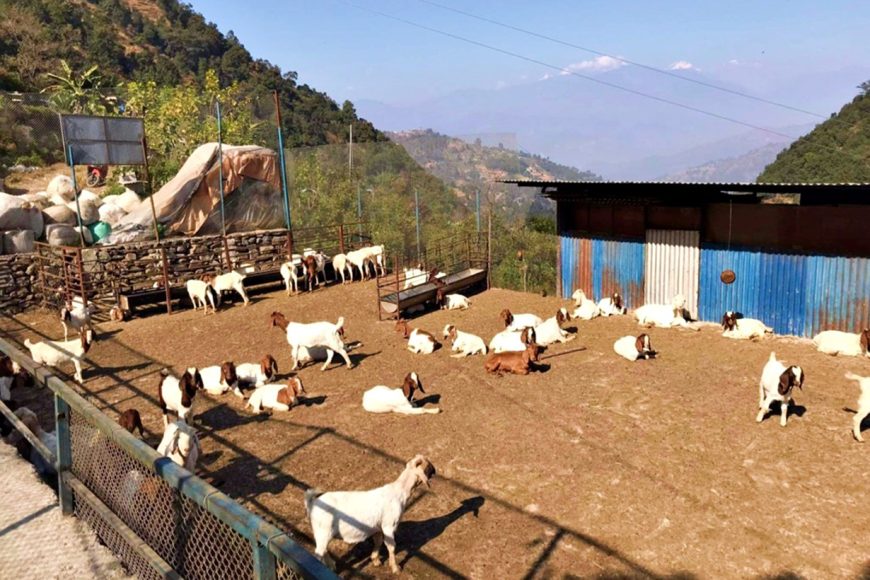
The 7-Week Residential Goat Keeper Training Program is specifically designed to meet the needs of aspiring goat farmers in Nepal. The training is conducted entirely in the Nepali language and takes place in Bhimdunga, Nagarjun, Neapal.
As a fully residential program, participants are provided with accommodation, meals, and all necessary on-site facilities, creating a focused and immersive learning environment. The course offers a comprehensive blend of practical and theoretical knowledge, covering all essential aspects of goat farming—from housing and feeding to health management and marketing. Participants stay at the institute’s residential accommodation.
This program aims to empower local farmers, youth, and entrepreneurs with the skills needed to improve goat production sustainably. Through hands-on experience and expert instruction, participants gain the confidence and competence required to manage goat farms effectively, contributing to their livelihoods and the agricultural development of Nepal.
Program Schedule
- Duration: 7 Weeks
- Days per Week: Sunday to Friday (6 Days/Week)
- Morning: Theory (2–3 hrs)
- Afternoon: Practical (3–4 hrs)
- Location: Bhimdunga, Nagarjun, Neapal
Weekly Breakdown
Week 1:
| Day | Morning (Theory) | Afternoon (Practical) |
|---|---|---|
| Sunday | Orientation, Course overview, Importance of Goat Keeping in Nepal | Introduction to Goat breeds, Characteristics, Selection Criteria Learning Objectives: Understand course layout, importance, and basic goat types |
| Monday | Goat anatomy & physiology (basic) | Identify body parts, hands-on with live goats Learning Objectives: Learn goat’s anatomy & physiology basics |
| Tuesday | Housing types & design principles | Build or assess goat housing, hygiene practices Learning Objectives: Know housing requirements and implement hygiene |
| Wednesday | Feeding basics: Types of feeds & nutrition | Feed preparation & ration formulation Learning Objectives: Understand feed types and prepare balanced rations |
| Thursday | Water management & sanitation | Water quality testing, cleaning procedures Learning Objectives: Ensure adequate water supply and sanitation |
| Friday | Record keeping importance & methods | Prepare simple record sheets & data collection Learning Objectives: Learn record keeping and basic farm management |
Week 2:
| Day | Morning (Theory) | Afternoon (Practical) |
|---|---|---|
| Sunday | Nutritional requirements of goats | Analyze feed samples Learning Objectives: Understand nutrient needs |
| Monday | Feed conservation & storage methods | Feed storage, preservation methods Learning Objectives: Learn proper feed storage and conservation |
| Tuesday | Forage & pasture management | Pasture assessment and improvement Learning Objectives: Understand forage production and pasture care |
| Wednesday | Concentrates & supplements | Preparing concentrate feed mixes Learning Objectives: Learn concentrate feed formulations |
| Thursday | Feeding schedules for different age groups | Implement feeding plans for kids, does, bucks Learning Objectives: Apply feeding plans based on age and production stage |
| Friday | Feed budgeting & cost management | Prepare feed budget & cost analysis Learning Objectives: Learn to manage feeding costs and budgeting |
Week 3:
| Day | Morning (Theory) | Afternoon (Practical) |
|---|---|---|
| Sunday | Common diseases & symptoms in goats | Disease identification & sample collection Learning Objectives: Recognize common diseases and symptoms |
| Monday | Parasite control & prevention | Deworming and parasite control methods Learning Objectives: Learn parasite control techniques |
| Tuesday | Vaccination schedules & methods | Administer vaccines Learning Objectives: Understand vaccination importance and application |
| Wednesday | First aid & emergency treatment | Treat wounds, fractures, and common emergencies Learning Objectives: Develop basic first aid skills for goats |
| Thursday | Biosecurity & farm hygiene | Farm sanitation procedures Learning Objectives: Implement biosecurity measures to prevent disease |
| Friday | Record keeping for health management | Health record maintenance Learning Objectives: Maintain proper health records and monitoring |
Week 4:
| Day | Morning (Theory) | Afternoon (Practical) |
|---|---|---|
| Sunday | Reproductive anatomy & physiology | Reproductive system observation Learning Objectives: Understand goat reproductive system |
| Monday | Breeding methods & selection criteria | Select breeding stock Learning Objectives: Learn to select and manage breeding animals |
| Tuesday | Heat detection & mating management | Heat observation & mating practice Learning Objectives: Manage breeding cycles and mating |
| Wednesday | Artificial insemination basics | AI demonstration or video Learning Objectives: Gain basic knowledge of AI procedures |
| Thursday | Pregnancy diagnosis & care | Palpation or observation Learning Objectives: Learn pregnancy detection and management |
| Friday | Kidding management & care of new born kids | Assist kidding & new born care Learning Objectives: Manage birthing and neonatal care |
Week 5:
| Day | Morning (Theory) | Afternoon (Practical) |
|---|---|---|
| Sunday | Milk production & milking techniques | Milking practice Learning Objectives: Learn proper milking procedures |
| Monday | Growth monitoring & weight recording | Weigh goats and record growth Learning Objectives: Track growth and development |
| Tuesday | Feed efficiency & production optimization | Adjust feeding for production Learning Objectives: Optimize production efficiency |
| Wednesday | Waste management & environmental impact | Waste handling & composting Learning Objectives: Manage waste to reduce environmental impact |
| Thursday | Farm budgeting & financial record keeping | Prepare simple farm budgets Learning Objectives: Manage farm finances and budgeting |
| Friday | Cost-benefit analysis of goat farming | Analyze production costs & returns Learning Objectives: Understand economic viability |
Week 6:
| Day | Morning (Theory) | Afternoon (Practical) |
|---|---|---|
| Sunday | Market analysis & demand assessment | Survey local markets Learning Objectives: Understand market demands and opportunities |
| Monday | Pricing strategies & negotiation skills | Role-play pricing & selling Learning Objectives: Learn pricing and negotiation techniques |
| Tuesday | Value addition (milk products, meat processing) | Prepare simple goat product items Learning Objectives: Add value to products for increased income |
| Wednesday | Packaging & branding basics | Design labels and packaging Learning Objectives: Learn packaging and branding for market appeal |
| Thursday | Cooperative formation & group marketing | Group formation exercises Learning Objectives: Organize cooperative groups for marketing |
| Friday | Record keeping for business & marketing | Maintain business records Learning Objectives: Manage business transactions and marketing data |
Week 7: Review, Assessment & Certification
| Day | Morning (Theory) | Afternoon (Practical) |
|---|---|---|
| Sunday | Field visit to goat farms | Observe and record farm practices Learning Objectives: Apply learning in real farm settings |
| Monday | Hands-on advanced practices: disease treatment, breeding | Assist in advanced tasks Learning Objectives: Gain confidence in practical farm management |
| Tuesday | Group project work: prepare and present marketing plan | Group presentations Learning Objectives: Develop teamwork and presentation skills |
| Wednesday | Final practical exam: Feeding, health care, breeding | Test practical skills Learning Objectives: Assess practical competence |
| Thursday | Final theoretical exam | Theory exam Learning Objectives: Assess theoretical knowledge |
| Friday | Course review, feedback, and certificate distribution | Closing ceremony 7-Week Goat Keeper Training Program (Chitwan TVET) Learning Objectives: Reflect on learning and celebrate completion |
Program Highlights
- Conducted fully in the Nepali language
- Follows CTEVT Nepal’s TVET model
- Combines practical learning with essential theory
- Covers end-to-end goat farming
- Includes final evaluation and certification